


Kilgoris Hosts Historic Ceremony as Charlene Ruto Marks Traditional Kalenjin Engagement
Kilgoris, Narok County, has today become the centre of attention as President William Ruto and First Lady Rachel Ruto host a major family celebration marking an important new chapter in the life of their daughter, Charlene Chelagat Ruto.
The ceremony taking place on Saturday, August 8, 2026, is known as Koito ak Chaik, a traditional Kalenjin engagement and farewell ceremony. It is being held at the Ruto family’s Intonna Heritage Farm in Naserian Village, Kilgoris Town, Narok County, with guests beginning to arrive ahead of the programme that was scheduled to start at 10 a.m.
For many Kenyans, the occasion is attracting attention not only because Charlene is the daughter of the sitting President, but also because the event brings together two important elements: a highly personal family milestone and a traditional ceremony rooted in Kalenjin culture.
Unlike an ordinary engagement party where a couple may simply exchange rings and celebrate with friends, Koito carries a deeper family meaning. It is a formal stage in the journey towards marriage in which the two families come together, acknowledge the relationship and begin or formalise discussions surrounding marriage and bridewealth. The “Chaik” element is associated with the bride’s farewell from her parental home as she prepares for married life.
That makes today’s event much more than a glamorous gathering at a presidential family property. It is a cultural ceremony in which family, elders, tradition and marriage preparations come together.
Charlene is 33 years old. She was born on January 11, 1993, according to widely published biographical records, and celebrated her 33rd birthday earlier this year. Her age was also reported during her birthday celebrations in January 2026.
She is one of President William Ruto and First Lady Rachel Ruto’s daughters and has developed a public profile of her own through youth empowerment, agriculture, climate action and other social initiatives. She founded the SMACHS Foundation and has also been associated with The Young People’s Network International. She holds a Communication degree from Daystar University and an MBA in Hospitality Administration and Management from Les Roches in Switzerland.
Her public journey has placed her in the spotlight for several years, particularly through programmes involving young people. But today’s event places a different side of her life before the public: her transition towards marriage.
The man at the centre of that transition is Isaya Yunge, a Tanzanian entrepreneur whose background is strongly connected to technology, education and youth innovation.

Yunge is not simply known because of his relationship with the President’s daughter. He has built a profile in technology and social entrepreneurship over the years. He is associated with Goodsam Technologies and is a co-founder of Smart Kaya, a venture focused on smart-home technology. He has also been involved in SomaApp, an initiative designed to help students discover scholarship and education opportunities.
His public biography is particularly notable because his involvement with youth issues began when he was still very young. At the age of 17, he was selected as a UNICEF Africa Youth Ambassador and participated in the 2007 G8 Summit, where he spoke on issues affecting children and young people. His later work in technology and education continued that interest.
Yunge was also recognised internationally, including through the Queen’s Young Leaders Award in 2018 for his work using technology to support young Africans. He has been associated with international programmes and leadership initiatives, including training linked to the Swedish Institute and Cambridge, while also being described as an alumnus of the Harvard Ministerial Leadership Program.
Public biographical information gives Yunge’s date of birth as March 23, 1990, which makes him 36 years old in 2026. That would put him approximately three years older than Charlene. However, unlike Charlene’s birthday, the fiancé’s age has not been a major feature of the official material surrounding today’s ceremony, so the age should be treated as biographical information rather than something announced by the Ruto family during the event.
The gathering at Intonna Heritage Farm has also attracted a sizeable list of prominent personalities.

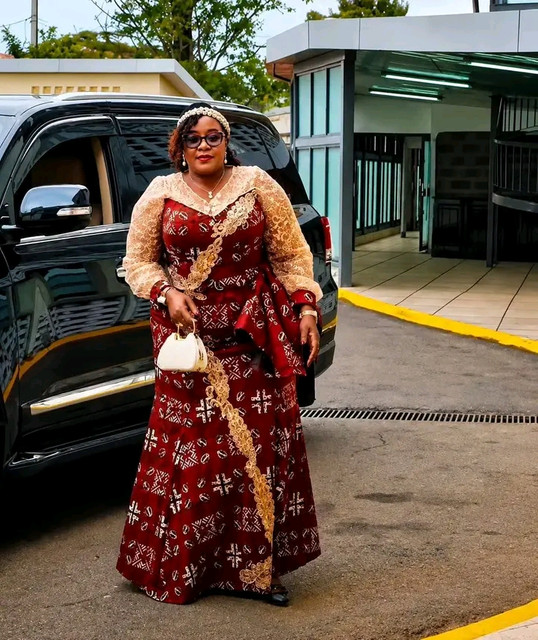


Among those reported at the ceremony are Cabinet Secretary Aden Duale, Interior Cabinet Secretary Kipchumba Murkomen, Water, Sanitation and Irrigation Cabinet Secretary Eric Mugaa, Nairobi Governor Johnson Sakaja, Nairobi Senator Karen Nyamu, Nairobi Woman Representative Esther Passaris, Githunguri MP Gathoni Wamuchomba, Bomet Senator Hilary Sigei, Bomet Woman Representative Linet Toto, Lang’ata MP Phelix Odiwour, popularly known as Jalang’o, and Kapseret MP Oscar Sudi.
Naiyanoi Ntutu Ng’eno, widow of the late Emurua Dikirr MP Johana Ng’eno, has also been reported among those attending.
The arrival of the guests has itself become part of the spectacle surrounding the occasion. Reports and images from the venue show numerous vehicles and helicopters at the farm, underlining the high-profile nature of the gathering.
Fashion has also played an important part in the day. Several guests have embraced African-inspired clothing, traditional suits, colourful kitenge and cowboy-hat styling that fits the ranch setting. Nairobi Governor Johnson Sakaja and Jalang’o were photographed in matching brown traditional suits, while Karen Nyamu also wore a brown outfit. Esther Passaris appeared in an African-inspired traditional outfit.
The colour choices have added another layer of visual identity to the celebration. Many guests have been seen in brown, while Charlene and her bridal party have taken a different approach. Her bridesmaids have reportedly worn matching green dresses, with Charlene standing out in a green-and-gold outfit.
But behind the clothes, helicopters and famous guests is the central purpose of the ceremony: a traditional Koito is fundamentally about families.
In a customary setting, the bride and groom’s families come together through representatives and elders. Discussions can involve the relationship between the families, marriage arrangements, blessings, cultural expectations and bridewealth. The exact process varies between families and communities, and modern ceremonies can combine traditional practices with contemporary wedding arrangements.
The event can therefore be understood as a bridge between two families rather than simply an announcement that two people are dating.
The “farewell” component is equally significant. In the traditional understanding, a daughter who is preparing for marriage is being symbolically released from her parents’ home and welcomed into another family. Elders may offer advice and blessings as the couple prepares for the responsibilities that come with marriage. Music, food, cultural clothing, dancing and symbolic gifts can all form part of the wider celebration.
For Charlene, the symbolism is particularly striking because the ceremony is taking place within her own family’s extensive property in Kilgoris. Rather than separating the occasion from her family background, the setting brings the celebration directly into the Ruto family environment.
The invitation itself identified the event as “Koito ak Chaik (Engagement and Farewell)” and was issued in the names of William Samoei Ruto and Rachel Chebet Ruto. It also carried a biblical reference from Psalm 91:11, reflecting the family’s Christian faith and the importance attached to prayer and protection during the new chapter.
There is also an interesting connection between today’s ceremony and an earlier public moment in Charlene’s life. In February 2024, during the Healing the Nation Crusade at Nairobi’s Nyayo Stadium, Charlene publicly asked American preacher Benny Hinn to pray for her to find a husband who would support her work with young people. The prayer attracted considerable public attention at the time.
More than two years later, she is now at a traditional engagement ceremony with a Tanzanian entrepreneur whose own background includes youth empowerment, education and technology. That connection has naturally become one of the most talked-about aspects of the story.
The ceremony does not, however, mean that Charlene and Isaya are already legally married. A traditional engagement is a major step towards marriage, but it is different from the final wedding ceremony. Today’s event is essentially about formalising and celebrating the relationship within the cultural traditions of the families.
So what happens after Koito? The next stage would normally be the continuation of wedding preparations between the two families. The exact date, venue and format of a subsequent wedding ceremony have not been publicly confirmed in the current reports surrounding today’s event.
Depending on the family’s wishes, the couple may proceed to additional religious, civil or cultural marriage arrangements before holding a larger wedding celebration. In a modern Kenyan wedding, couples may combine several elements: a traditional engagement, church ceremony, civil registration, reception and additional family celebrations. It is therefore important not to describe today’s Koito as the final wedding unless the family itself announces that status.
What is clear is that the Ruto family has chosen to mark the occasion publicly and culturally, allowing one of Kenya’s most recognisable presidential families to celebrate an intensely personal milestone through Kalenjin tradition.
The presence of senior government officials has inevitably given the occasion a national profile, but the ceremony itself remains centred on Charlene, Isaya and their families.
For the Ruto family, today is a moment of transition. Charlene is no longer simply being celebrated as the President’s daughter or as a young woman involved in youth and climate initiatives. She is being formally presented within a traditional marriage process that connects her family to another family across the Kenya-Tanzania border.
For Isaya Yunge, the ceremony represents the public beginning of another chapter alongside a woman whose life has been closely watched because of her family background and public activities.
And for the wider public, the Kilgoris celebration offers a rare look at how an influential modern Kenyan family incorporates traditional customs into a major family milestone.
The helicopters, prominent guests, coordinated outfits and expansive farm may have provided the visual drama, but the heart of Koito ak Chaik is much older and simpler: two families coming together, elders offering guidance, a relationship being formally recognised, and a daughter being prepared to begin a new stage of life.
As celebrations continue at Intonna Heritage Farm, attention will now shift from the traditional engagement to what comes next for Charlene and Isaya. The eventual wedding arrangements, including the date, venue and whether the couple will have a separate church or civil ceremony, remain matters for the families to announce.
For now, August 8, 2026, will remain the day Charlene Chelagat Ruto’s journey towards marriage was publicly marked through one of the most significant traditional ceremonies in the Kalenjin community.
